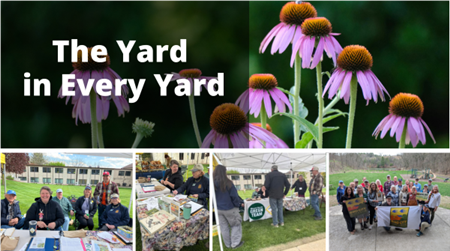
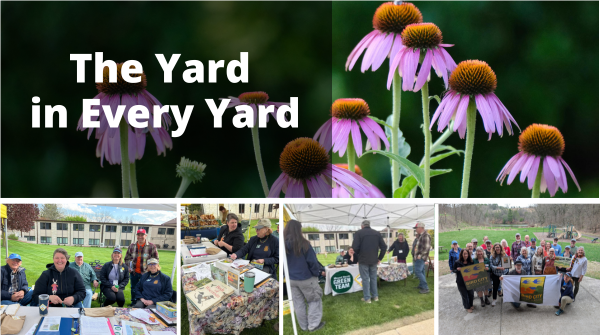
The Mount Horeb Green Team, a Rotary Community Corps group that brings together Rotarians, students and local residents, has had a busy spring season.
Since the snow melted, the Green Team has:
Helped Mount Horeb earn designation as a Bird City.
Joined the Lions Club and a local Girl Scout to start the village's first food waste drop off site to compost waste and keep it out of landfills.
Staffed a booth at the weekly farmer’s market to attract new members interested in improving the local environment.
Promoted the “Yard in Every Yard” initiative to have village residents plant a yard of native plants in every yard to feed and shelter pollinators and birds.
Mount Horeb becomes a Bird City
As newly arrived bluebirds sang from the trees surrounding Stewart Lake in mid-April, Mount Horeb officially was awarded the title of Bird City.
Mount Horeb joins a network of bird havens, a movement that began in Wisconsin in 2009 and has spread to 12 other states and the countries of Mexico, Brazil and Columbia. Wisconsin is home to almost 90 bird cities, which are certified every year on four general criteria: habitat enhancement, protecting birds from threats like cats and window strikes, education and outreach, and sustainable practices.
Kelsey Bell, Bird City Wisconsin program director, travelled from the Lake Michigan Bird Observatory in Port Washington to present the signs and banners Mount Horeb can now proudly display. She praised the efforts of the many groups in Mount Horeb who came together on the effort, which was led by Kerry Beheler of the Mount Horeb Sustainability and Natural Resources Committee. Most new bird cities have fulfilled about 10 activities that benefit birds, Mount Horeb had already achieved 24, Bell said.
Bell singled out the Bluebird Trail in Stewart Lake, which has fledged 1,000 bluebirds from nest boxes in the park, and collected data for more than 25 years, and the Mount Horeb Green Team’s “Yard in Every Yard” initiative, which promotes native pollinator and bird-friendly plantings across public and private spaces.
“The ‘Yard in Every Yard’ initiative really stood out to me,’’ Bell said. “It is very unique and I have not heard of other communities doing that. I would like to get updates because I think it’s something other communities can implement. That is one of the things Bird City can do, we inspire other communities.”
Mount Horeb groups whose work helped make Mount Horeb bird friendly include Friends of Stewart Park; Mount Horeb Rotary, which sponsors the Green Team; Mound Vue Garden Club; Mount Horeb Chamber of Commerce; the Mount Horeb Community Garden; and the Mount Horeb Sustainability and Natural Resource Committee.
Birds need all the friends they can get, Bell said, “Since the 1970s, we have lost upwards of 3 billion birds.” The largest threats are from outdoor cats, which kill 2.4 billion birds a year, and window collisions, which kill another million birds every year.
For their part, birds are important for controlling mosquitos and other pests, for dispersing seeds, for inspiring art and music and generally improving the mental health of people. Being named a Bird City can also help put the Mount Horeb area on the ecotourism map.
“People travel all over for birds,” Bell said. “They get gas, they go for coffee, they stay overnight.”
Mount Horeb witnessed the birding frenzy in 2023 when a limpkin, a tropical wading bird native to Brazil and the Caribbean, showed up to eat snails in Stewart Lake. As word spread, the park became a mecca for birders and wildlife photographers.
People who want to learn more about the Bird City Initiative can go to birdcity.org/wisconsin/mount-horeb